Showing posts with label creativity. Show all posts

Friday, October 7, 2011

BECOMING ATTACHED TO ATTACHMENT THEORY 2

Cooking and the Therapeutic Recipe

          After years of study and experience with psychotherapy, regardless of the mode I use with my clients, my initial analysis of problems persists in probing early experiences and relationships because I believe the clients’ beginnings are the bases for understanding their dysfunction and discomfort. Unless this point is reached, psychotherapy seems to be more of a hit-and-miss proposition with therapists attempting to guide clients by feeling their way through the dark, hoping that something, anything helps clients, regardless of whether they understand the reasons for that “something” working or not.

An approach that does not include a base of understanding the roots, the foundation of clients’ beings feels almost unethical. Why take the time and effort to try to help clients when therapists’ recipes for assistance are like a soup to which therapists add different ideas and sprinkles of modes of theory here and there, crossing their fingers that the soup will turn out to be at least palatable? Yes, the individual ingredients may be tasty and nutritious but unless they are paired, harmonized, and bound together with a secure basis of truth, a basic stock, the resulting recipe for treatment will probably fail.

Is it not better to be more direct, less time consuming and painful in the long-run by identifying the dysfunctional beliefs at the core of clients’ issues as soon as appropriate? Then therapists can use that knowledge as a compass or a recipe book to help ensure a safer, more secure return to mental health.

Therapy should be more like baking bread. Baking even simple bread requires very careful measurement and basic ingredients. Leave out the main ingredients, the flour, the yeast, the timing, and the bread fails. Yes, different kinds of bread recipes exist as do different kinds of people with many different kinds of problems; so therapists can learn to alter some of the ingredients to suit clients; however, the addition or subtraction of ingredients must still be carefully measured and include foundation ingredients that resemble the original goal of the intended creation.

I believe in creativity, but only creativity with care, creativity with truth, creativity with a secure base from which to start. To do otherwise, therapists risk playing with the lives of clients and violating the main ethic of psychotherapy: do no harm.

Attachment Theory Beckons

How did I become attached to attachment theory (AT)? As a natural outgrowth of my belief in some basic tenants of psychoanalytic theory, logic supported the premise that early attachments are responsible for the health of individuals. Bowlby (1988), a former psychoanalytic therapist, found this to be true in his breakthrough Attachment theory. AT supported Freud’s initial theory (that he later, unfortunately, revised) that how people are treated in infancy and early childhood influences their lives and relationships.

The tenants of AT include the premises that parenting behavior is learned and influenced by evolution.  Knowledge of parenting failures is valuable when understanding clients’ issues and struggles, and clients use many types of defense mechanisms to avoid confrontation with painful memories. Many aspects of psychoanalysis and AT diverge and connect.

 One similarity is that AT uses transference to help understand clients’ attachment issues and the uses the therapeutic relationship as a new attachment with a “secure base” from which to help heal clients. Ultimately, my natural inclinations to approaching human problems from a psychoanalytic stance evolved easily into accepting and valuing AT.

(continued...)

          SEE POSTS:  BECOMING ATTACHED TO ATTACHMENT THEORY 1 and 3

Friday, July 29, 2011

IS THERE A LINK BETWEEN CREATIVITY AND MENTAL ILLNESS 5

(PLEASE NOTE THAT THIS IS THE LAST IN A 5 PART SERIES.  I ENCOURAGE YOU START FROM THE BEGINNING...)

Questions for Further Exploration

If creativity implies deviation from norms, what is the nature of the reciprocal relationship between the behaviors of creative people and the reactions of society? How can the connection between creativity and mental illness be explained? Is it caused by neural pathways in the brain which affect both creative and mental functioning? What is the effect of hormonal imbalance on creativity? What is the effect of family systems on creativity and creative potential?

Several researchers describe the effect of gender identification and androgyny on creativity, stating that androgynous individuals have a higher tendency to be creative than traditionally male or female models. Are women really generally more creative than men? Has androgyny and creativity been researched and measured? If the foregoing is true, in what way are men and women creatively different? Are more creative women generally more susceptible to mental illness than men?

Crow (1997) suggests that perhaps mental illness is the price we pay for our complex brain functioning which, in turn, fosters creativity. If evolutionary development is responsible for humans to slip from creativity into mental illness, what is the mechanism responsible for this phenomenon? Can it be managed or turned off? And, if so, how? Why and when would we want to tone down creativity in favor of better mental health? Whose choice should it be? If there truly is a connection between creativity and mental illness, what kinds of mental illness have the highest connection with creativity?

When considering creativity in a biological, genetic sense, what is the role drugs/medication can play in managing mental illness in creative people? Do medications dull creative impulses, as many artists claim? Do drugs and alcohol enhance creativity, as many artists claim?

Conclusion

Undeniably, the comparison of creativity with madness has a long history. Perhaps, like myths, some truth in this belief exists. Despite research flaws, repeated connections between mental disorders and creative people are drawn and are difficult to ignore.

Creativity has been prized throughout history, though not always rewarded and cultivated. As with any issue in mental health, the issue of creativity is also extremely complex. Clear, broad, and universal definitions are needed to measure creativity in order to help determine the link between mental illness and creative individuals.

Counselors need to carefully assess all possible factors surrounding the life of highly creative clients and nurture their creativity to help them navigate an intricate and complicated world. The oxymoron in this suggestion is that, in treating creative clients, the nature of therapy encourages the client to look inward. However, as proposed in the Verhaeghen et al. study on rumination, it appears that in examining life too closely, clients and therapists may unwittingly be fostering depression and other mental illnesses. At any rate, addressing the issues of creative people certainly suggests that, in order for therapists to be highly effective much may be required of them. They need to be well trained in psychology, have wide creative interests, draw upon their own abilities for Janusian thought and ambiguity, and, especially, to be creative in their own therapeutic approach with clients, if they hope to make a positive difference in the lives of mentally ill creative people.


For impressive lists of bi-polar and uni-polar depressives visit:  http://www.pendulum.org/information/information_famous.html

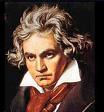
BELOW ARE PICTURES OF PEOPLE WHO HAVE BEEN DIAGNOSED WITH BI-POLAR DISORDER
***
 VIVIEN LEIGH

ABBIE HOFFMAN

 EDGAR ALLEN

GENE TIERNEY


BEETHOVEN

MEL GIBSON

OZZIE OSBOURNE

RICHARD DREYFUSS

TRACY ULLMAN

Wednesday, July 27, 2011

THE LINK BETWEEN CREATIVITY AND MENTAL ILLNESS 2


 PICASSO
EDVARD MUNCH


 TOULOUSE-LAUTREC
                                                                                                    CLAUDE MONET

POLLOCK

Van Gogh's work has always been regarded within the framework of his mental incapacity.  Up to date, he has been (retroactively) diagnosed with: schizophrenia, depression, epilepsy, and, the latest most popular diagnosis, bi-polar.

 VAN GOGH

The philosopher, Heidegger, posits that art exists only within the recognition of the social or institutional construction of the boundaries of art worlds. Indeed, in the professional art world, it seems that the value placed on art differs, or is at least somewhat dependent on whether the artist is mentally ill or not. Being generally ignorant of what "good" art is, the public depend on art dealers' opinions to tell them what art piece is a valuable investment. Therefore, a case can be made that the value of art cannot stand on its own.

Flaws: The Case Against the Link

According to one researcher, creativity has been simply defined as something valued and new; and madness (or mental illness) as self-destructive behavior that is deviant. Considering the previous discussion on issues defining creativity and mental illness, these definitions hardly suffice as a solid or comprehensive foundation on which to build a discussion of the link between mental illness and creativity.

Another expert on studies of creativity has asserted that there is a definite link between mental illness and creativity. He stated that there are three common characteristics shared by people with high creative production and mental illness: (1) mood disturbances, (2) tolerance for irrational, and (3) vague thinking. However, some researchers refute this assumption. While several studies appear to support the mental illness/creativity link, the findings of these studies also appear to contradict each other.

One study on mental illness and women poets shows a direct link between creativity in writers and mental disorders. This study attempts to show that female poets are plagued far more than male poets with mental illness, especially bipolar illness. The researchers admit that their study is speculative, however, and contradicts other researchers’ findings in similar studies. Although tantalizing connections between mental illness and female poets has been made, there are also some limitations of these findings. Hampered by criticisms of many flaws in the design of the studies, such as response bias, "Hawthorne" and subject effects, acquiescence, self-selection, focus on celebrity biographical sources, and diagnoses from non-professional sources.

Creativity is not limited to the flamboyant, the famous, and the popular, although these types of individuals are whom we most often hear about in the media and in books. After all, the public is not likely to want to read about a creative person who is average and leads a quiet, healthy life. Therefore, researchers appear to study these famous types most often. However, these factors limit the validity of research as both being biased in the selection/participation process and raising questions about the motivations of participants in these studies.  For example, as a voluntary process, researchers cannot be sure neither of volunteers' diagnoses nor whether they are motivated because they want to be counted among the "creative and famous" (participant bias).

One researcher used case studies of famous artists and writers to demonstrate that mental illness not only is not a prerequisite for creativity, but also suppresses it in its active state. For example, describing the artistic processes of Edvard Munch, a leader of the Expressionist movement in Europe, and Jackson Pollack, a leader in the Abstract Expressionist movement in America, he asserts that the temporary abatement of these two artists' bipolar symptoms helped the artists produce some of their finest works during those periods of abatement. Pollack, himself, admitted that the psychotherapy he received while institutionalized helped him to create art that established his unique style of painting. After considering this foregoing information, there exists a logical temptation to conclude that creativity is a product of health and that mental illness neither causes nor enhances the creative process. However, other researchers say that artists generally create less during the calm periods in their life.


MORE TO COME...!

Tuesday, July 26, 2011

IS THERE A LINK BETWEEN CREATIVITY AND MENTAL ILLNESS?


Many people automatically assume there is a thin line between creativity and mental illness, citing anecdotal evidence and pointing to famous "crazy" artists from the past and present. However, this conclusion is quite difficult to prove, as reflected by many attempts to find solid evidence through research studies.

A connection between madness and creative genius has been made throughout history. Shakespeare wrote that, “The lunatic, the lover and the poet are of imagination all compact.” Proust said, “Everything great in the world is created by neurotics.”  Even in ancient times Plato and Aristotle spoke of creativity as “divine madness” as being “a gift from the Gods” and that genius was infused with a mixture of insanity.  Yet, until about 25 years ago, research on this topic was limited.  Determining the validity of a link between mental illness and creative people is still hotly debated, despite the over 9000 studies conducted on creativity and mental illness between 1960 and 1991.

There are many flaws in studies researching creativity and its relationship to mental disorders, casting doubt on the reliability of the creativity/mental illness connection.  Even though it is extremely difficult to prove a link between creativity and mental illness, the consistency with which humanity has made this connection through the ages indicates that a link does exist!

Because creativity has been valued throughout history, determining a link is important.  Why?  If we can determine a link, we may be able to determine a cause and, in doing so, help creative persons avoid suffering and maximize their potential good for themselves and society.  Furthermore, because creativity is thought to be an ability that most of us use or can learn to use in everyday life, identifying the aspects and possible links between creativity and mental illness can have universal benefit and appeal.

But exactly what are we measuring?  Interestingly, there is no difference in the definition of madness and inspiration in Latin.  One essential difficulty in establishing a link between mental illness and creativity is in defining the terms creativity and mental illness. How can researchers measure something if they are not exact about the meanings of what they are measuring? In the field of psychology, and especially for the purposes of measurement, the definition of creativity is varied. Many authors have attempted to describe creativity.  But researchers have yet not arrived at a consensus regarding the process, the product and the person of creativity.

The definition of mental illness is also problematic.  Although the American Psychiatric Association’s Diagnostic and Statistical Manual (DSM) comes to a consensus with the World Health Organization’s (WHO) International Classification of Disease (ICD) systems on the reliability of various mental illness categories, these instruments have not improved on the validity of how to categorize mental illness.

Some descriptors of creativity in the research include:  introspective, intelligent, less compliant to social norms, enthusiastic, energetic, sensitive, adventurous, radical, and persistent.  Obviously, creativity involves many other abilities and qualities and the interplay of these qualities complicates the search for a universal definition of creativity. Descriptions of creativity appear to vary and sometimes are contradictory, which leaves us with the question, “Do creative people fit into society or don’t they?”

We agree that creative people have original ideas, however, just because people have original ideas, they are not necessarily creative.  Another apparent contradiction in the definition of creativity is that creative people are intrinsically motivated (from within themselves) (according to personality measures of creative people) but they also have been found to be extrinsically motivated (from outside factors).  Further confusing the issue, some researchers warn that when both extrinsic and intrinsic factors do not coincide these factors create psychological stress and can cause madness.

Most definitions of mental illness are based on symptoms, signs, and some perceived disability.  Even though a convergence of signs, symptoms and disabilities point to a particular mental illness, mental health professionals continue to have difficulty diagnosing illnesses such as personality disorders, schizophrenia, much less more mild or atypical disorders. How then can we establish a link between creativity and mental illness if diagnoses of mental illness vary and are especially difficult to establish in creative people (by virtue of their creativity!)?

The question of finding universal definitions is further complicated when considering the framework of studies on creativity and mental illness. If studies are produced within various disciplines (e.g., behavioral, biological, clinical, cognitive, etc.), the definitions are tweaked accordingly.

There are also different types of creativity to consider used in different domains. Researchers need to recognize these domains and consider them when trying to measure creativity. Some people are creative musically, some mathematically, some verbally, some bodily, and so on.  Within each of these domains, there are differences between creative people.  For example, poets differ from playwrights, who differ from comic writers and artists, designers, and performing artists.  In addition, they all differ in their cognitive patterns.  Considering the above complications and contradictions, it seems that a link between creativity and mental illness is extremely difficult to prove.

Recently, however, encouraging news regarding a universal aspect and definition for creativity can be found in numerous articles on the link between mental illness and creativity.  Many professionals say that the cognitive processes of creative people are unique and follow Janusian processes: that is, “…the ability to resolve antinomies or to accommodate apparently opposite or conflicting traits in one’s self-concept.”  This concept at least partly explains a connection between the Janusian thought process and creative individuals. Janusian thought enables creative people to think and conceive of antithetical and contradictory ideas at the same time.  The literature review on links between mental illness and creativity do not appear to dispute this aspect of creativity.  That is an exciting prospect!  Perhaps, in applying Janusian thought to a literature review on creativity and mental illness, it can bridge the apparent contradictions found in the mass of definitions on creativity and mental illness used by researchers and facilitate a more "creative" approach to and understanding of the subject.

(More to come on this subject.  Feel free to ask me for references!)